
Travel stories blog
THE ZEPPOS-0100 TRAVEL STORYby Miet De Bruyn, CptnZeppos passenger
Miet De Bruyn, aboard the M/S Charlotta
Back and Forth: Antwerp–Kemi, Monday, March 30, through Wednesday, April 15
1 A Wonderful World
A long time ago, I worked as a harbor pilot in the Port of Antwerp for several years
and that's how I discovered a whole new world. That's also when my interest was sparked
for ports and cargo ships, and I tried to get to Colombia on a banana boat
travel, which, unfortunately, I wasn't able to do. To my great delight, I discovered a few years ago
a small, specialized travel agency in Antwerp, Cptn Zeppos, that offers exactly these kinds of trips
facilitates. And so my dream did come true after all, and now I’m traveling along as the only passenger
the M/S Charlotta, a container ship flying the Maltese flag and owned by
from the Finnish shipping company Langh Ship. We'll be sailing from Antwerp to
Kemi, in Lapland, and back again. Our first stop was the port of Rotterdam. Eyes wide
In short, I arrived there: hustle and bustle everywhere and in every possible way. So
There were train-car-like trailers driving around, each carrying one or two containers. None
The cabin was empty—no sign of a captain: they were computer-controlled container ships,
who carried out their jobs flawlessly and swarmed about like ants.
A cargo ship like that is a world unto itself, a world where, during your journey, you get a little
become a part of. You aren't entertained; you're supposed to keep yourself busy
to adapt to life on board and to the rules that apply there.
You’ll receive a very warm welcome, and the entire crew will greet you warmly. You
You have access to the bridge, the captain, and his officers; you can ask as many questions as you like
ask questions and receive patient, detailed answers. There’s only one condition: you may not
not to disturb them while they work. When entering and leaving a harbor, through a channel that is often narrow
In the shipping channel, or when the ship is departing or docking, everyone on the bridge is on high alert
Be on your guard and keep quiet. It’s okay to take it all in, though—especially the
Docking is incredibly spectacular: that large, cumbersome vessel has to maneuver with great precision and
must be moored carefully, because, of course, both the ship and the quay wall must
Surviving docking unscathed. After all, even the slightest mistake can mean
millions in damages. Time and time again, the pilot (guides the ship on its way to, from
and in the harbor) and the crew inside, performing that incredibly thrilling precision work just like that
It’s executed so perfectly and so smoothly that you don’t even feel the slightest jolt. No wonder
So, there’s always a sense of mild euphoria on the bridge after we dock. At that moment, I have the
I feel the urge to start clapping, and my mouth keeps dropping open in
admiration for the incredible skill of the crew and the pilot.
Life on board follows a recurring pattern. High alertness and
extreme stress when approaching and leaving a port, when mooring, and
the ship setting sail. You can feel the tension on the bridge gradually rising, and
I assume the same applies below deck. Everything happens according to a strict schedule and
standard procedures. Once the ship is docked, loading and unloading begins; hard
Work for everyone. The deckhands handle the physical loading and unloading. Captain
and the deck officers ensure that the loading operation is carried out in accordance with the loading and unloading plan.
They are also responsible for the ship's stability and ballast management. If necessary
ballast water is pumped from port to starboard, or vice versa. The engineers
(the officers in the engine room) are also responsible for the
Power supply: They ensure that the auxiliary engines (generators) run smoothly and stably
supply power. They also oversee bunkering, that is, the process of taking on
fuel, lubricating oil, and fresh water. Only after loading and unloading does calm settle over the
ship. Then life slows down, everything becomes a little more relaxed, and sometimes people go ashore for a bit,
if possible. Even on the high seas, life on board is a bit more relaxed. The captain and
Officers remain on standby, but everyone is under less pressure and there is time for
tasks: administrative work, equipment testing, disaster drills, maintenance work, minor
repairs, painting, ... Until the next port comes into view. Hours in advance
The crew is getting ready—in the engine room, on deck, and on the bridge. You can feel the
Tension builds and alertness increases. And then the whole cycle starts all over again.
When ports are located close to one another, such as Antwerp and Rotterdam, this means
...and, of course, that the crew gets no rest—or at least not enough—because the
The ship simply has to be loaded and unloaded as quickly as possible. It's no picnic—that's life.
of sailors ...
2 Swaying Along
There is a strict hierarchy aboard a cargo ship. The captain of the Charlotta
is not authoritarian, but is a strong leader, and the crew has a great deal of respect for
him. He’s almost always on the bridge, and the crew can always turn to him; he
The third officer (a recent graduate with little experience) tries to be friendly and patient
to learn as much as possible, and he makes the necessary decisions without hesitation. At
Not every boss at the bar is equally knowledgeable or nice, but that's where you go every night
Just head home and that's it. On board, Kees is never done: as long as the journey lasts
As long as the voyage lasts, the ship is your home. The captain is responsible at all times for everyone on board
is on board. Every crew member and every passenger entrusts their life to him, and that is
This is no joke. Trust is not just an empty word here; having a boss you can rely on for the
Being able to count on 100% reliability is of vital importance on a ship—literally. A good
A captain is like a good father: strict when necessary, but always fair.
Maybe that's also one of the reasons why I love being a passenger on a
cargo ship. Not just because of the sea, the ports, and the ship—although those, too,
are all fantastic. Having exactly that kind of trust in the people who run this ship
to let go; to entrust your fate and your life completely to them. To let go of control, and for a moment
bear no responsibility. Of course, this applies only to the passenger(s) on a
cargo ship. They can only do that because the crew doesn't, because
it does, in fact, bear responsibility, including that for the passenger(s). That's what makes it so special
that we're so welcome on board and that the crew lets us step into their world for a moment
to take action. “It is what it is” or “Go with the flow” aren’t just clichés here; they are the
everyday reality. Going with the flow, adapting to life on board
and to every change that arises: after all, you have no choice—the ship with everything
That's all there is to it—that's what you have to make do with at sea. Maybe I actually like that: there are
There are no options; you simply have to accept what happens and how things turn out.
"Maybe you have to come from an overpopulated country to realize what emptiness means"
people. The space around you seems to shift toward your inner self; you breathe
"freer, as if nothing were constricting your chest anymore." That's how Jan Brokken puts it in his story *The Sea*
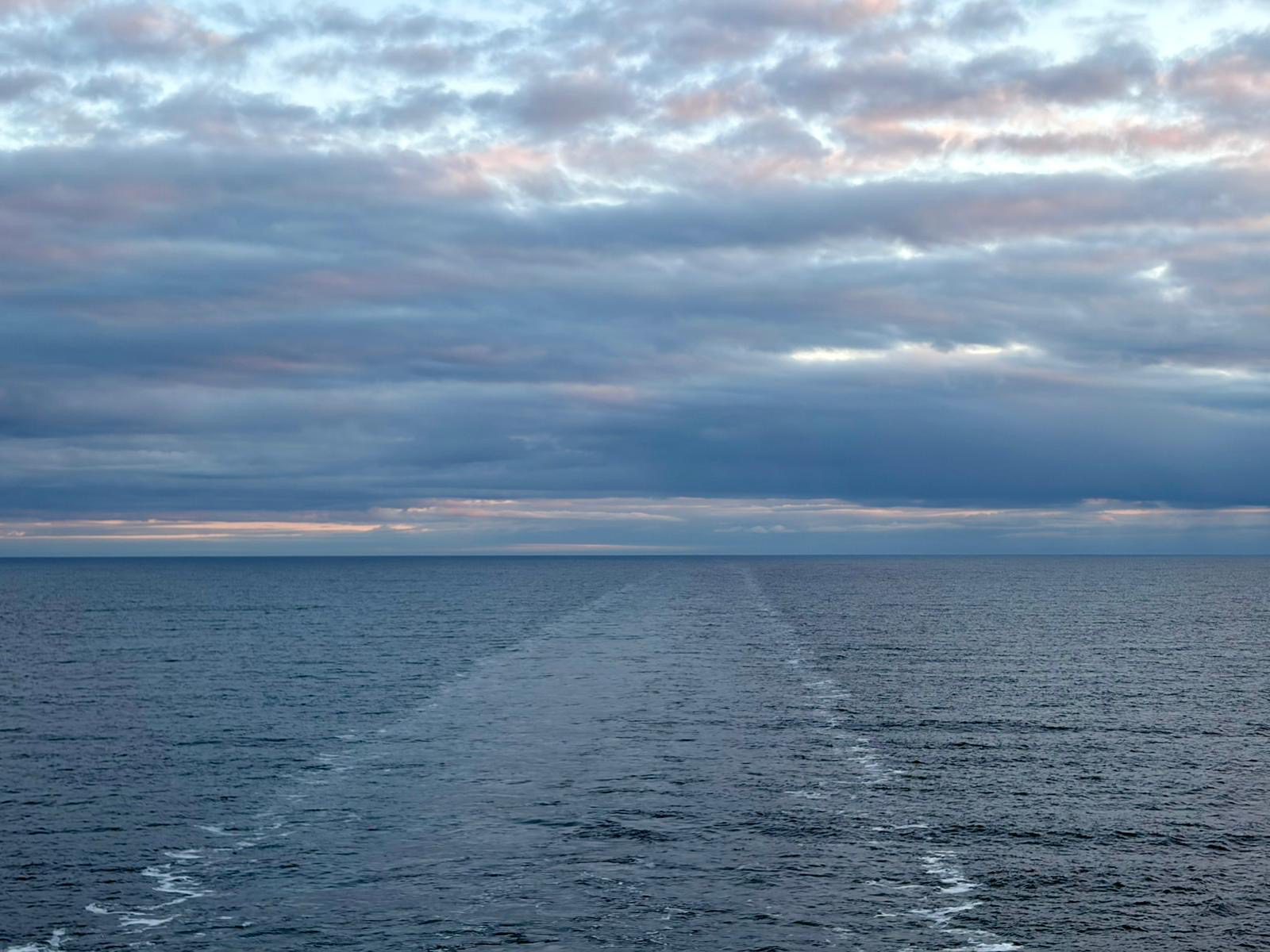
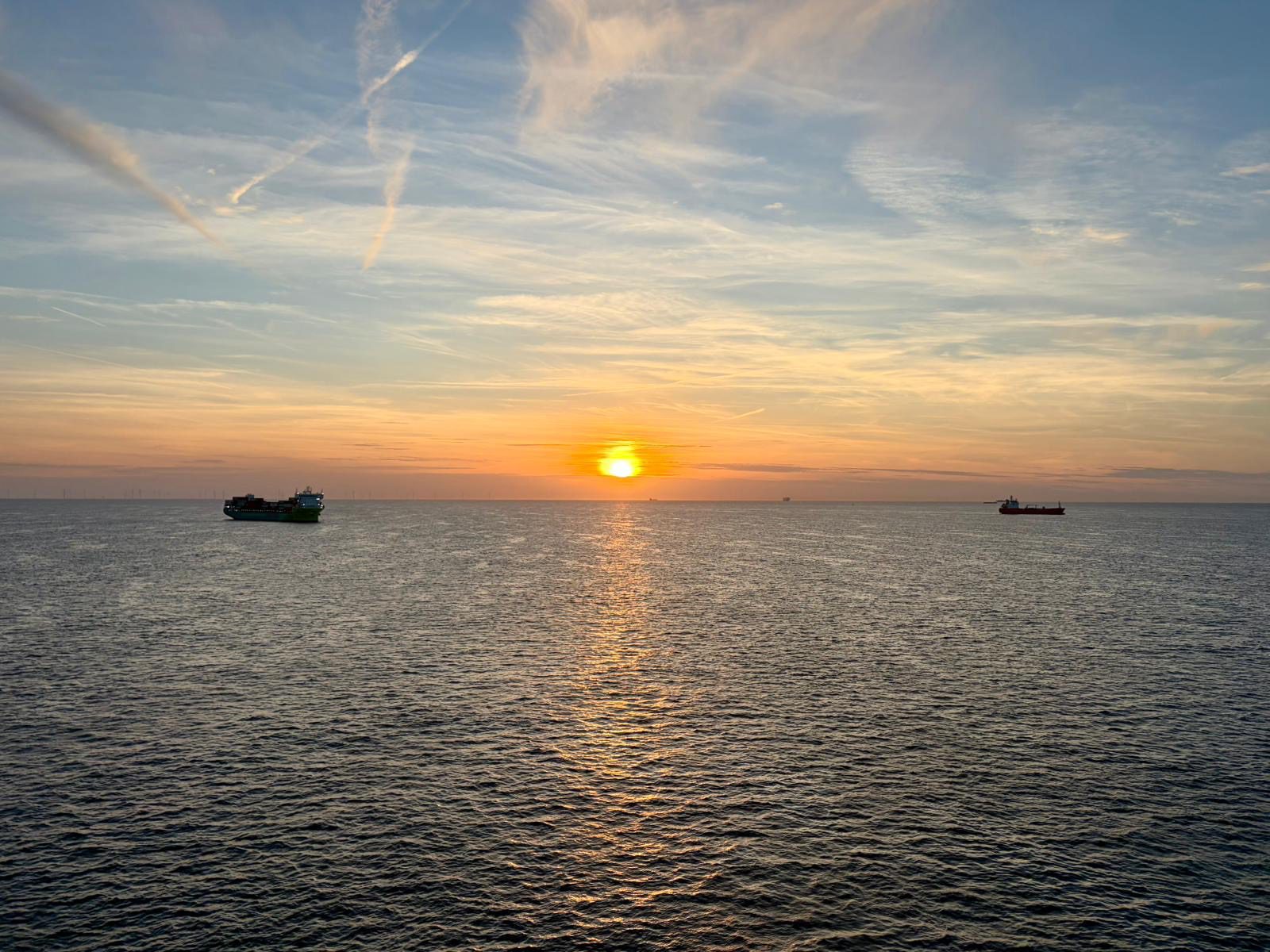
of pure sand. The vast, boundless, empty sea: as far as the eye can see, nothing else to be seen but
water that’s always moving. And yes: nowhere else do I breathe so deeply and so freely. But also how
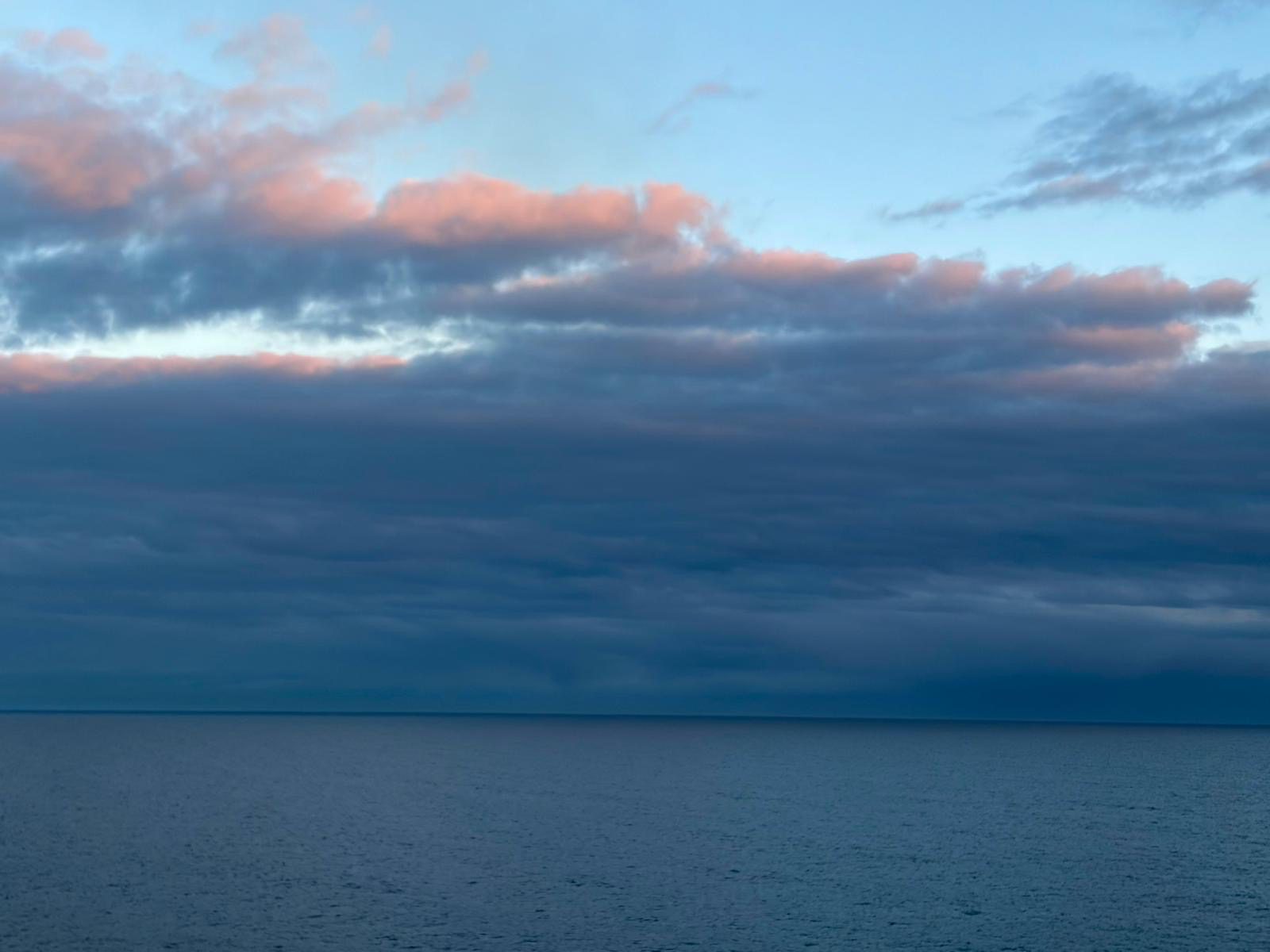
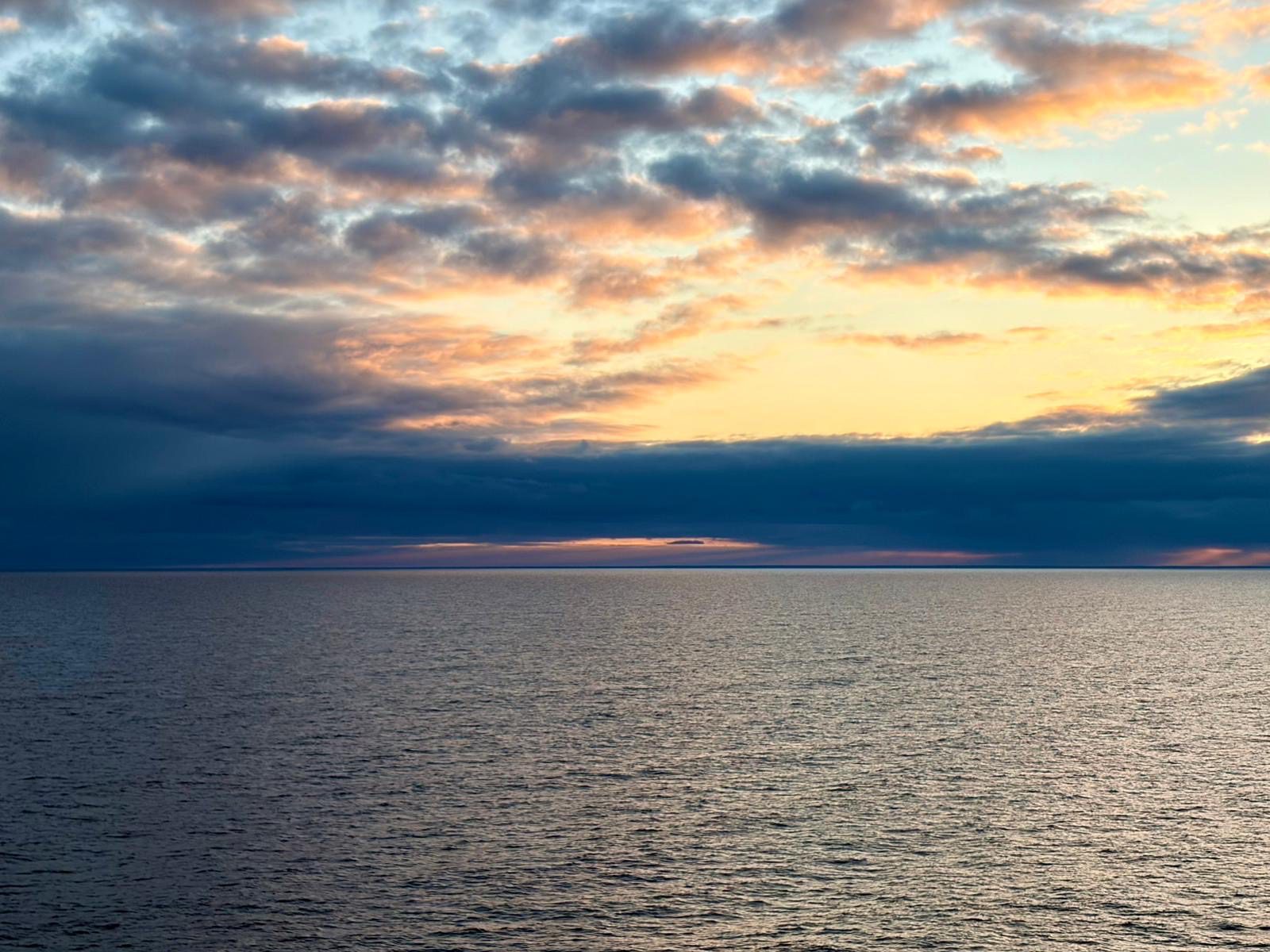
How incredibly beautiful she is, the sea—the way she sounds, the way she smells, the way she’s so capricious: lovely
rippling one moment and raging wildly the next. And her blue, her
Irresistible blue, in at least fifty shades! It couldn't get any better than this, I thought, ...
until we reached the pack ice. After all, Kemi and Oulu are ports in northern Finland,
in Lapland, on the Gulf of Bothnia. That means pack ice, even in April. Because it’s already
Since the ice was melting and had already become thinner, the Charlotta was able to sail through on her own. She had to
It was hard work, and you could feel her shaking and vibrating violently all the way to the bridge. That far
as far as the eye could see, a single expanse of ice in an infinite variety of shades of white and, in the light of the
setting sun, especially shades of blue and light blue. Only now do I truly understand what they mean by " ice blue"
mean. So it actually got even better.
Of course, it all depends on your context and situation. Because what might be a
While it is a source of beauty, it is a source of stress for the ship. Ice is an obstacle that
must be taken and requires a great deal of patience and concentration from the crew. In this
At this time of year, ice-class ships (specially built and equipped to
(sailing in northern waters) normally navigate through the ice without an icebreaker. If one is still needed
has to be called up, that’s quite a challenge when it comes to navigation. Even a
An icebreaker can get stuck if the ice is unexpectedly very thick. Since the ship is flat
When sailing behind the icebreaker, you must maneuver very quickly to port or starboard
to avoid a collision. And that's no easy feat with a vessel that weighs 11,759
A metric ton weighs!
3 Who's Who
Patience is always a virtue, and even more so when you're sailing. Waiting is just part of the experience.
at sea. Waiting for the pilot, a berth, the loading and unloading operations, waiting off the
locks and waiting again inside the locks (No locks on this trip.), on tugboats, on
the icebreaker, ... In addition, as a crew member, you’d better have a good dose of
flexibility, because things can change completely on board in a very short time, and if
When one domino falls, the others fall too. That’s why the Charlotta stayed an extra day and
night in the port of Oulu, because in Kemi, its next port of call, there is not (yet) any
there was room for her. But her berth in Oulu had actually already been reserved again for
another ship. As a result, the Charlotta had to spend the night elsewhere: shifting,
that is, changing berths, which, of course, with such a large vessel
That's easier said than done.
The official language on board is English, and during meals there is time to chat with the crew
to talk. The curiosity is mutual, and you try to give them an idea of
who you are and what you do. In turn, you’ll get to know them and their
A double life: one on shore and one on board. Because their life on shore, of course,
life just goes on, even though they're not here. For example, on April 9, the third child was born
born to the first officer while he was at the helm of the Charlotta during the
Preparations to leave the port of Oulu. Long live video apps! Although, of course,
but a poor substitute. Brave people, sailors, and their loved ones back home are at least
just as brave.
The captain and the officers normally sign on for three months, the
sailors for six to nine months, and only after their contract has ended do they go to
ship. There are three deck officers and three engineers, and all the officers follow a set
Watch. In principle, the captain does not stand a fixed watch, but is present on the bridge
during difficult navigation, such as entering and exiting ports, navigating narrow waterways, or in bad weather
(for example, ice cream!). The officers' regular watches are as follows: the first
An officer is on duty during the morning and evening shifts: from 4:00 to 8:00 a.m. and from 4:00 to 8:00 p.m.;
the second shift, the night and afternoon shifts: from midnight to 4 a.m. and from noon to 4 p.m.; the
third, the morning shift and the first shift: from 8 a.m. to 12 p.m. and from 8 p.m. to
midnight. Outside of these watch hours, the officers perform what is known as “day work”:
maintenance work, administrative tasks, ... and they remain on standby for special situations.
In addition, each officer also has a specific responsibility. For example, the first
The officer acts as the captain's substitute when necessary and is responsible, among other things, for
for the loading operation. The second officer is responsible, among other things, for the
medical incidents on board. If they're lucky, the officers will get all of that
in a single shift, but that’s not always the case, so taking breaks and/or sleeping is a regular part of it
steps in. On board the Charlotta, the captain occasionally takes over a watch or a task from
hand them over, but that's not a general rule on ships. The sailors aboard the
Charlotta works on a 6/6 shift schedule: 6 hours on and 6 hours off. Being at sea is, for them,
Working hours are typically from 8 a.m. to 12 p.m., but during loading and unloading, the
their workdays will also get longer. The cook makes sure that provisions are
has taken it upon himself to prepare three hot meals a day for sixteen people all by himself,
That's no small feat. The life of a sailor: no walk in the park...
You also gradually get a sense of who they are—the crew members—not just in
not only in their professional capacity, but also as people. For example, the captain of the Charlotta is very hospitable and
A warm-hearted man; the first officer was very courteous and caring, the second a bit
reserved, until he warms up, and the third is very young, nice, and a bit introverted. The first and the third
The train operators clearly like to joke around, and the second one doesn't say much, which, according to the
The other two make the engine room a very suitable workplace for him (There is
(after all, it was too noisy to have a conversation!). That's where the second officer had to
to make you smile. The cook is a very thoughtful man, and the sailors are very friendly and
on board. There are currently eight Filipino sailors on board the Charlotta, one Filipino
a cook and 6 officers. The officers are of the following nationalities: Ukrainian,
Russian, Bulgarian, and Georgian. The coexistence and collaboration of all those
nationalities—it works wonderfully here. Captain Ron’s iconic words in the
the 1992 film of the same name, "What Happens Aboard, Stays Aboard"—apparently, the opposite is true
too. Although, of course, I’ve strayed a bit from this very sensible
Captain Ron's unwritten rule!
From 1975 to 2017, the television channel France 3 aired *Thalassa*, a documentary TV-
a series about the sea, hosted by Georges Pernoud. He concluded each episode with
the same beautiful words. I’d like to share them with you, too: “Bon vent!”
Miet De Bruyn
On board the M/S Charlotta
Round trip Antwerp–Kemi
Monday, March 30, through Wednesday, April 15